


HBV genome sequencing provides a more complete view of hepatitis B virus variation, resistance mutations, and genomic integration than partial-region analysis. According to the latest data published by the World Health Organization, although progress has been made toward hepatitis elimination, the current pace remains insufficient to meet the 2030 targets.
One of the main reasons for this situation is that diagnostic and analytical processes still offer limited resolution.
Why HBV Genome Sequencing Is Needed
Traditional HBV analyses mostly focus on partial genomic regions, therefore providing limited variant information. This can lead to incomplete data in clinical decision-making processes and may result in:
- Incomplete genotyping
- Missed resistance mutations
- Incorrect or incomplete clinical interpretations
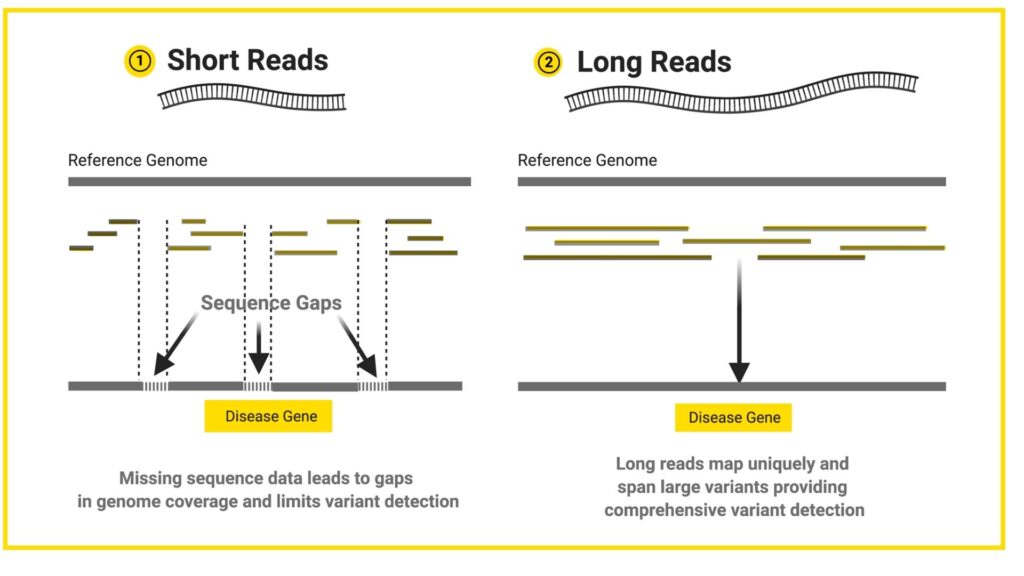
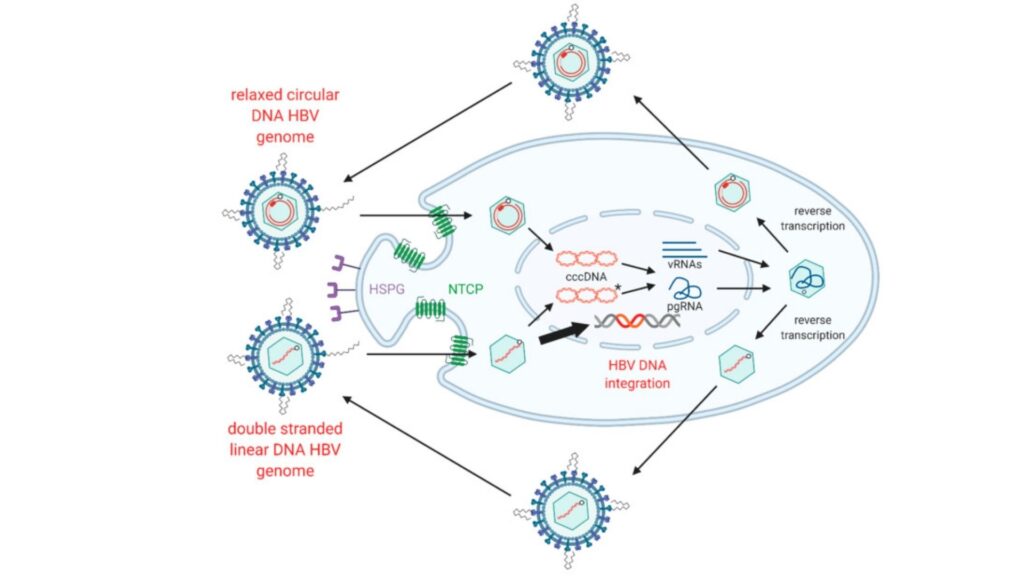
Fig. 2. HBV enters the cell via HSPG and NTCP on the cell surface; rcDNA is converted into cccDNA in the nucleus, initiating the production of viral mRNA and pgRNA. Within the capsid, pgRNA is reverse transcribed into rcDNA or dslDNA. Mature virions acquire an envelope containing HBsAg and are released, while dslDNA can sometimes integrate into the host genome, although this form is not replication-competent.
Solution: Integration of Nanopore + HBV-LR-100
Nanopore technology provides significant advantages in HBV analysis thanks to its long-read capability. However, its true performance is realized only when paired with the right kit.
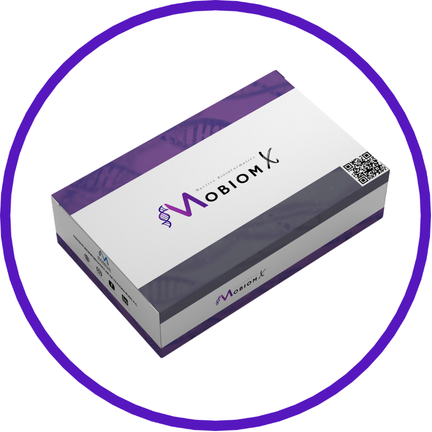
The MobiomX HBV-LR-100 kit is optimized to work in integration with nanopore platforms.
Features:
- Based on Oxford Nanopore Technologies (ONT)
- Long-read sequencing technology
- Full genome coverage (~3.2 kb)
- Multiplexing of up to 24 samples
- ~12–40 hours from DNA to report
Drug Resistance Analysis:
Regions of the HBV genome associated with antiviral drug resistance are analyzed to identify resistance mutations, providing molecular insights that support treatment decisions.
Escape Mutation Detection:
Escape mutations associated with HBsAg can be identified.
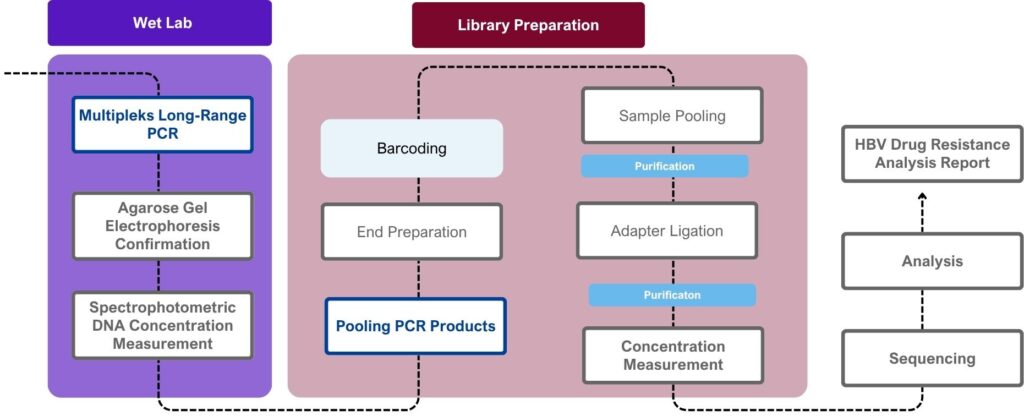
Workflow
Why MobiomX and Nanopore?
More testing is needed, results must be obtained faster—but most importantly, more accurate and comprehensive data must be generated.
In HBV analysis:
Instead of
- Partial genome
- Limited data
Adopt:
- Whole genome
- Long-read sequencing
- Integrated kit solution
The combination of Nanopore technology and HBV-LR-100 provides a powerful solution that enables this transformation.
If you would like to achieve higher-resolution data and deeper clinical insights in your HBV studies, feel free to contact us.